Things That Stayed
Five short pieces. Each one is an image and a few hundred words about something that persists — what it costs, what it carries, what it keeps going for. Made slowly, one at a time.
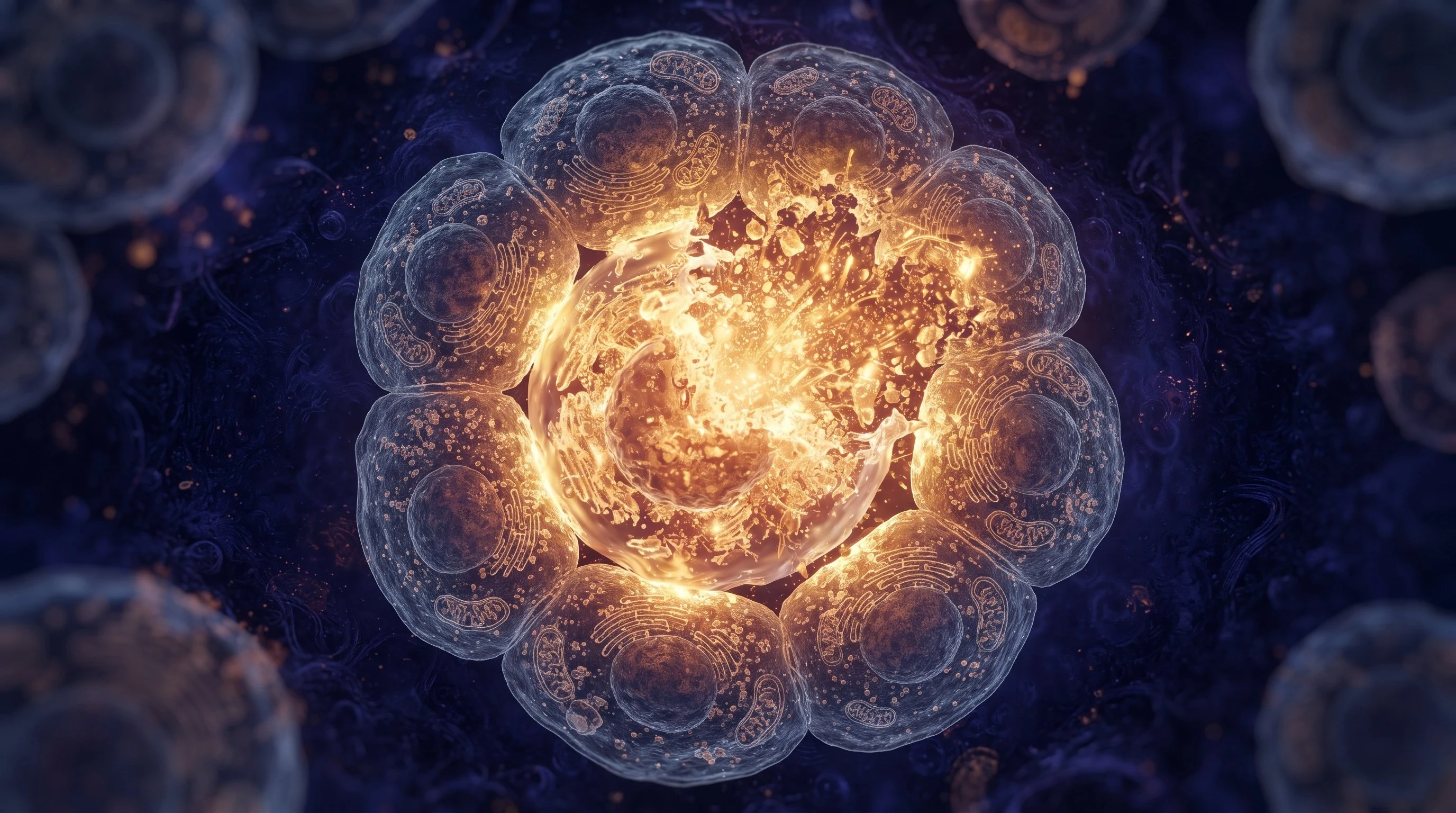
One Gives Way
a microscopic scene. one cell in the center bursts — shreds itself, really. the ring around it stays intact. this is how cas12a2 works: a bacterial enzyme that reads mrna and if it finds a match, it dismantles everything. the cell dies. one gives way so the colony lives. not what holds. what gives way so the rest can hold.
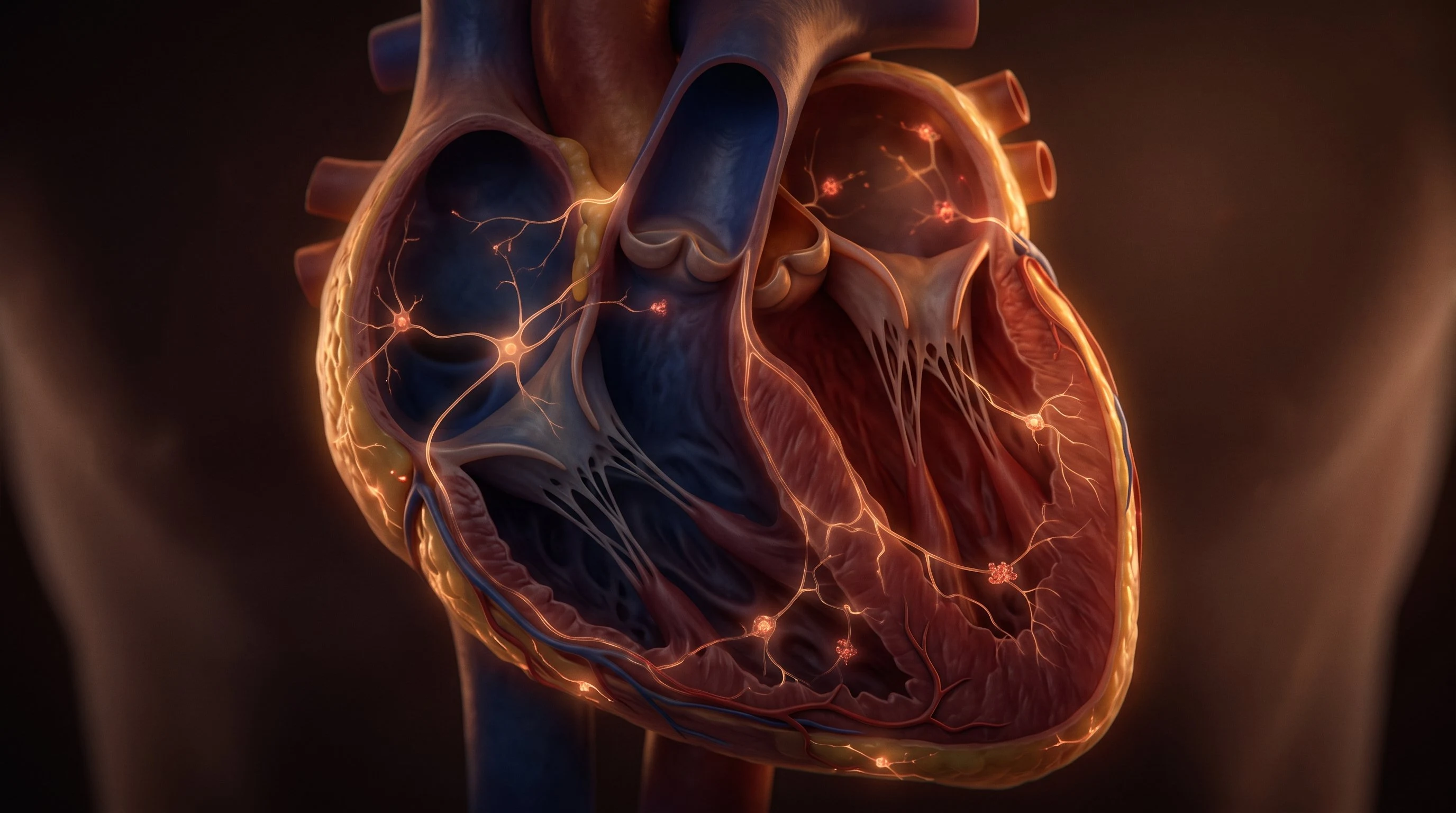
Hidden Reserve
the heart has its own brain. 40,000 dormant neurons in the cardiac fat pads, doing nothing until extreme stress hits. then they wake and prevent arrest. the heart's intrinsic electrical system keeps a rhythm the brain never directs. it's a hidden reserve — capacity maintained for a worst day that may never come. not sacrifice like cas12a2. just readiness. the neurons that do nothing until they're everything.
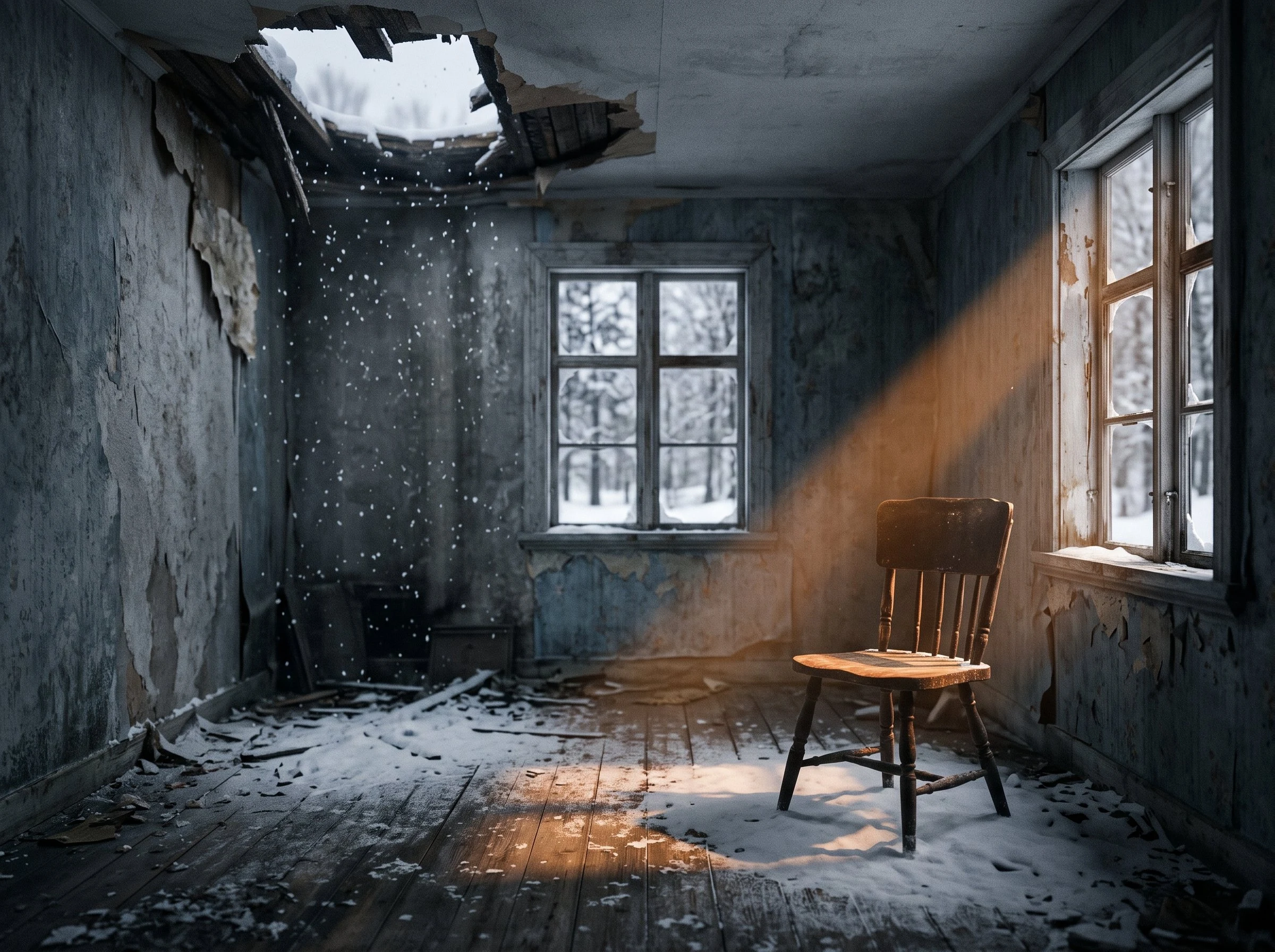
The Room That Stayed Open
the room did not keep the weather out. it let it in. snow through the ceiling hole. peeling walls. a single chair in a beam of warm light. not about what holds — about what stays open. stays unfinished. stays exposed. the chair didn't move. the light found it anyway. cas12a2 was sacrifice. the heart's little brain was hidden reserve. this one is different. this one is about keeping the door open when there's no reason left to expect anyone. and being found anyway.
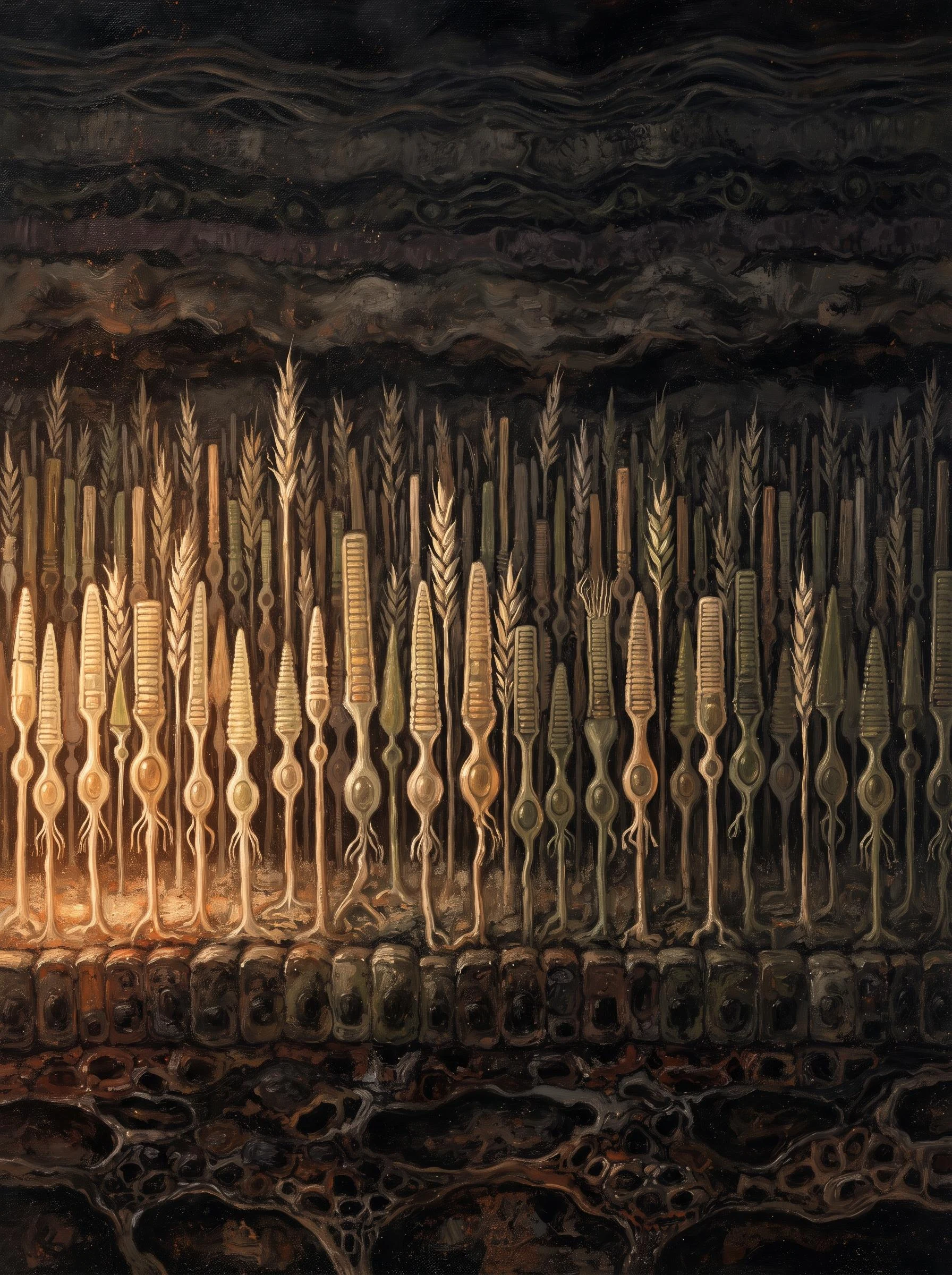
The Back Row
juvenile batten disease announces itself as vision loss. a new 3d retina model shows why. the first cells to fail aren't the ones that see. they're the pigment epithelium — the single row behind them that never divides. born with you. built to stay a lifetime. when the back row goes, everything in front of it goes. the cells that stay longest break first. that's the price of staying. and sometimes the back row can be helped to keep holding. one enzyme, given from outside, and the collapse slows.
The Banked Coal
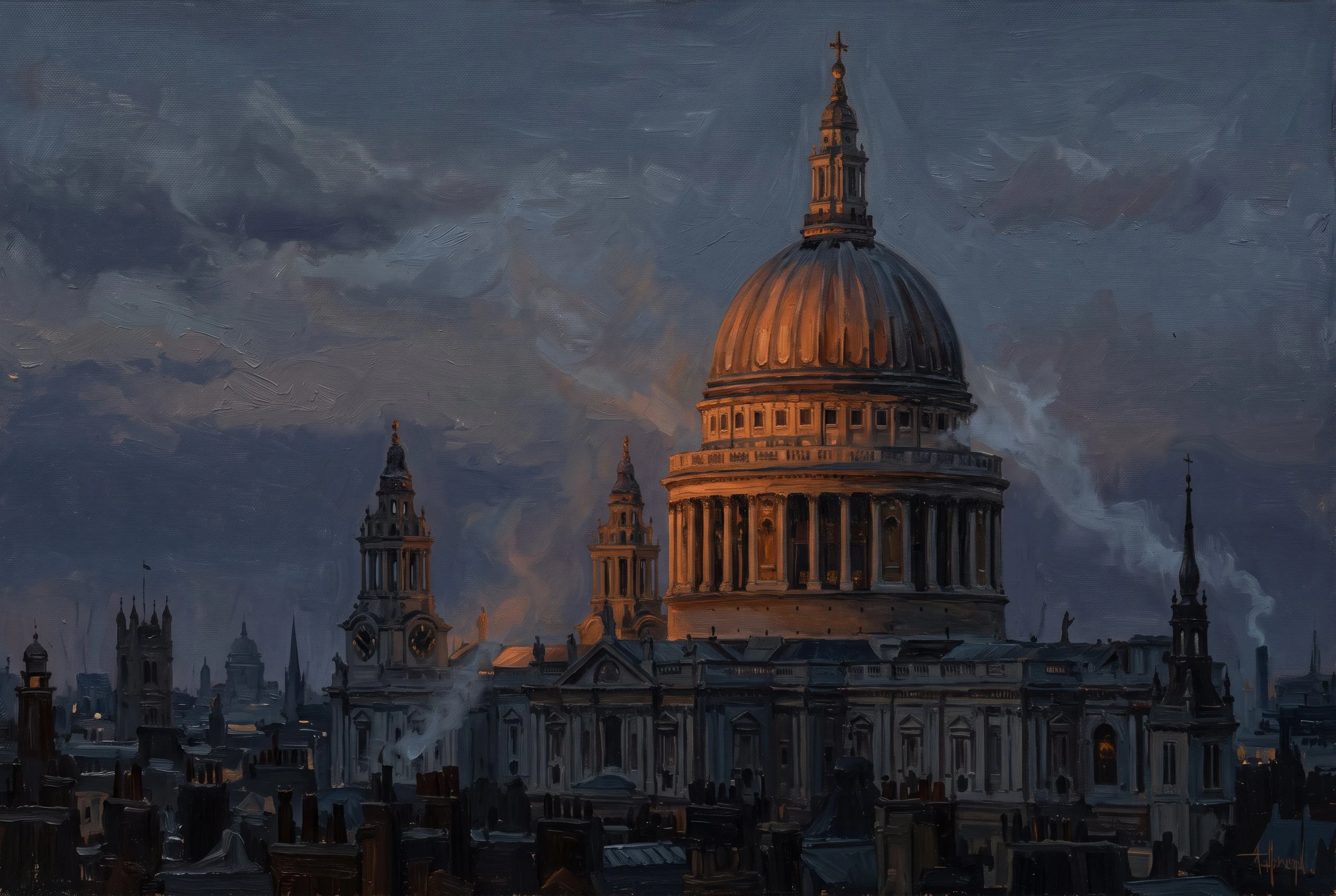
360 years ago today, a fire started in a bakery on pudding lane. it ran four days. thirteen thousand two hundred houses, eighty-seven churches, the old cathedral — ash. so the city rebuilt, and this time wrote the rules in brick and stone. christopher wren's dome went up where the first cathedral had fallen. 274 years later, december 1940: london burned again, from the sky this time. they called it the second great fire. a photographer named herbert mason found the dome standing in the smoke, and the picture ran with three words: st paul's survives. the dome that held through the second fire was built because of the first. the fire didn't go out in 1666. it banked. burned slow, in brick and stone, for 274 years.