The Rulebook

A strategic hex tile game of connection & interference for 2–3 players. Race to link your two corners with an unbroken flow of engraved lines β€” before your rival locks you out.

πŸ‘₯ 2–3 Players ⏱ 15–45 min 🎯 Ages 10+ 🧠 Easy to learn

01 Β· The Game

Lines are life

HEXFLOW is played on an engraved stone-tablet hex board. Players build a continuous path from their own corners to the opposing corners using hexagonal tiles whose routing lines run strictly flat-side to flat-side β€” never corner to corner.

It blends the spatial reasoning of connection games like Hex with the tactical tile-laying of Carcassonne. Every placement is permanent, every rotation matters, and a single well-timed Block can derail a carefully laid plan.

β€œIn Go, a stone’s liberties are its life. In HEXFLOW, a tile’s liberties are its lines. Every tile you place breathes connection into the board β€” or suffocates your opponent’s plans.” β€” B. W. Evans
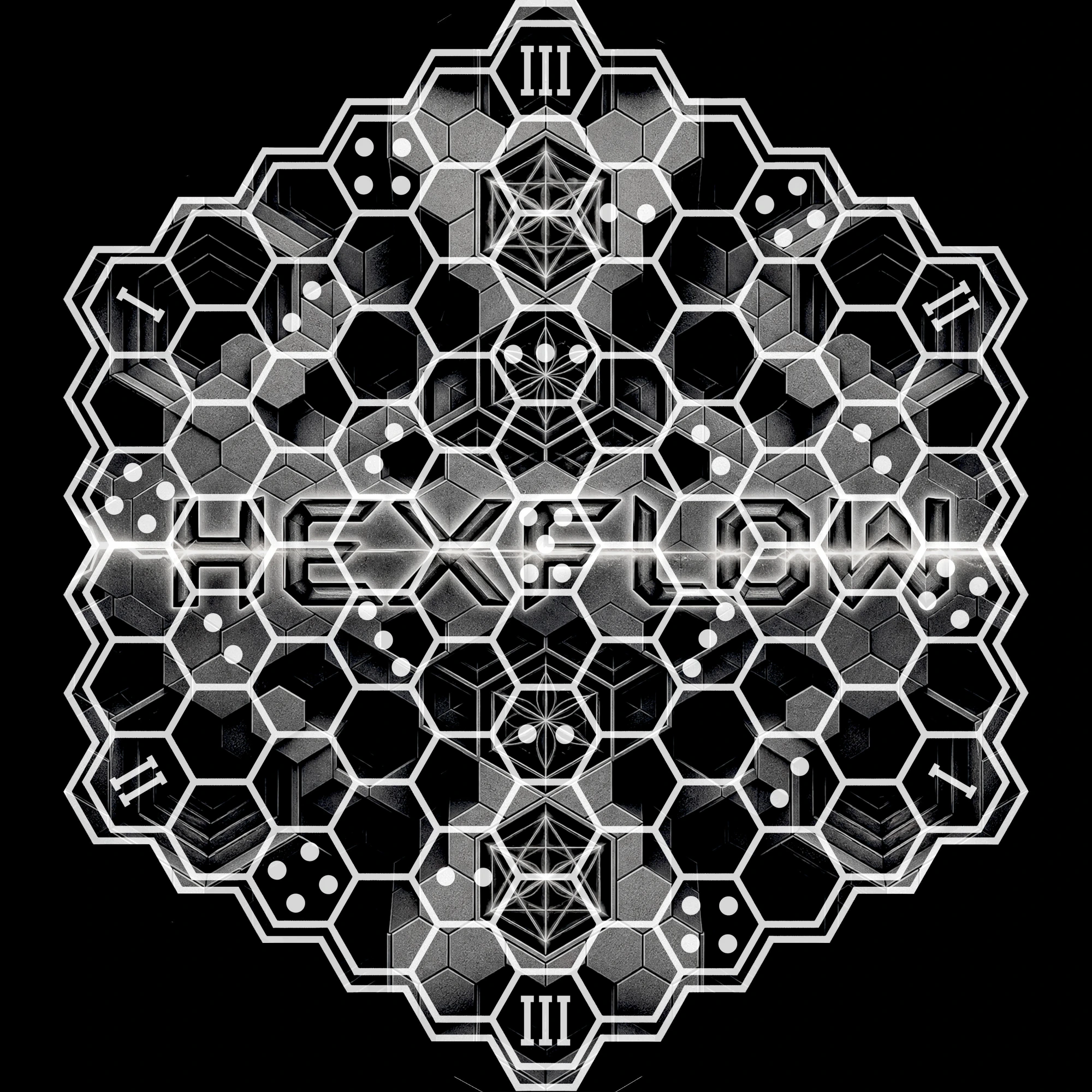
HEXFLOW hexagonal board
The HEXFLOW board β€” 91 hexes, three opposing corner pairs (I Β· II Β· III).

02 Β· In the Box

Components

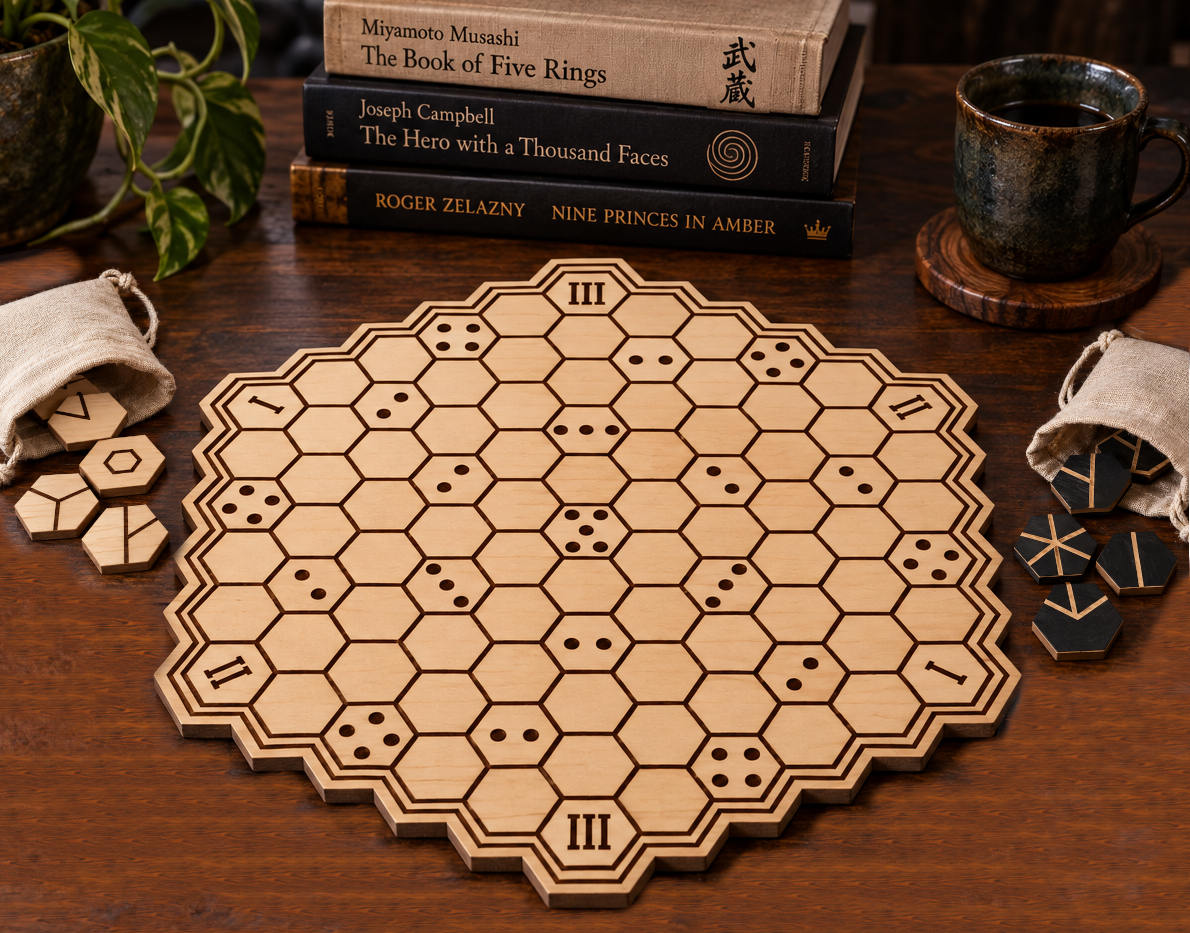
HEXFLOW laser-engraved wooden board with tiles
The HEXFLOW board β€” laser-engraved hardwood with black & white tile sets.

The Board

A hexagonal grid of 91 playable hexes. Opposing corner pairs are engraved I, II & III. Scoring hexes carry 2–5 dots, placed symmetrically so no player has an edge.

The Tiles

Each player owns a colour β€” Black, White, or Grey β€” with 11 unique tile types, two copies each (22 tiles). Tiles are drawn from a bag; you always hold a hand of 3.

The Dice

One die per player for the opening draft β€” the roll decides turn order and who claims which corner.

03 Β· Before You Play

Setup & the dice draft

Claim the board

Place the board between players. Each player will own one colour and its two diagonally-opposite corners.

Build your bag

Put your 22 tiles in an opaque bag and draw 3 tiles as your opening hand. Keep them hidden. Refill to 3 after every placement.

Roll the dice

Every player rolls once. Highest roll wins the draft (ties re-roll).

Winner chooses

The top roller decides to play FIRST or LAST and picks their starting corner. Remaining players pick corners in descending roll order.

Objective

Be the first to complete an unbroken, correctly-connected line of your tiles linking your two corners (or, on the 3-player Triangle board, reaching the centre cluster).

Two ways to win

Race. Completing the path ends the game instantly.

Points. The first completed path scores a bonus; play continues and total score decides the winner.

04 Β· Your Turn

How to play a turn

On your turn, perform all three steps in order. Then draw back up to three tiles.

Select & orient a tile

Choose any tile from your hand and rotate it to one of six orientations (0–300Β°). Once placed, a tile can never be moved or re-rotated.

Choose a position

Your first tile must sit on one of your own corner hexes. Every later tile must touch a tile already on the board and have at least one line that connects to an existing line. No orphan tiles.

Place & check

Commit the tile. If it completes your path, declare victory. Otherwise, pass the turn. You must place exactly one tile each turn β€” passing is never allowed.

Permanent

One tile per hex, forever. Touch-move etiquette: once your finger leaves the tile, it’s final.

Blocking is legal

Place tiles β€” including the line-less Block β€” to interfere with or redirect a rival. You may build adjacent to opponent tiles when lines connect.

Connect to win

A valid path is one continuous chain of connecting lines from one of your corners to the other (or to the centre).

05 Β· On Screen

Step by step, on the board

Here’s what a turn looks like in the digital game β€” pick a tile, spin it, place it, grow your flow.

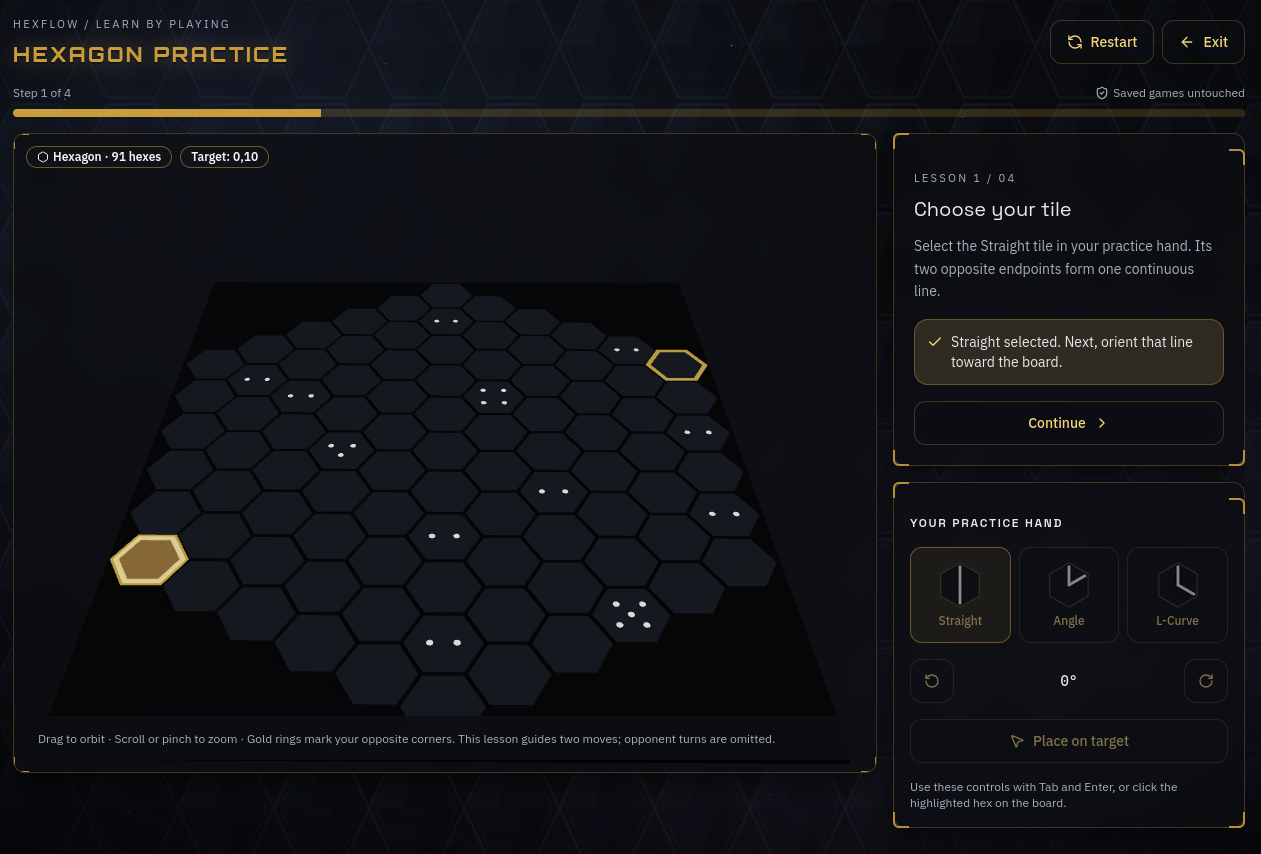
Step 1 β€” Choose your tile
Step 1 Β· Select β€” Tap a tile from your hand of three. The Straight tile is selected, highlighted and ready to orient.
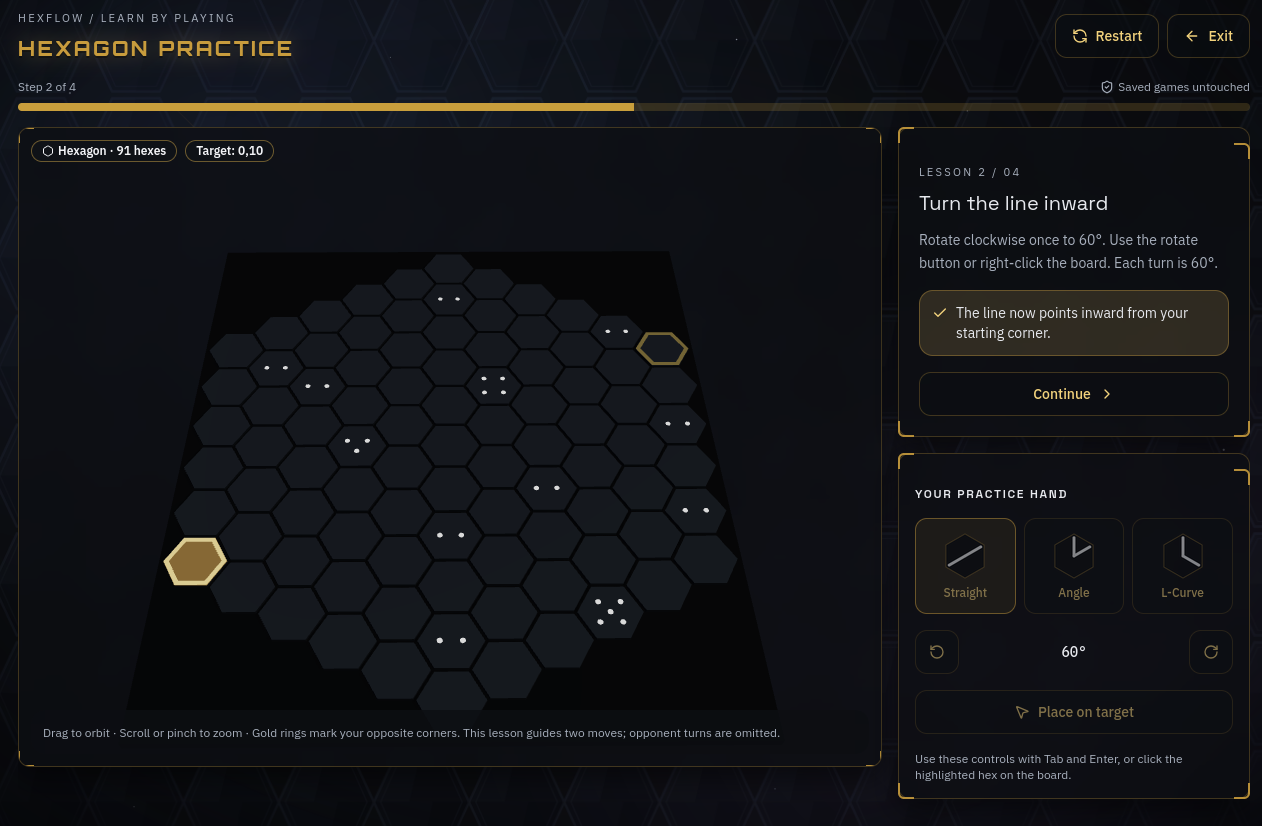
Step 2 β€” Rotate the tile
Step 2 Β· Orient β€” Rotate through any of six orientations (0–300Β°) until the lines point where you need them. Each click turns 60Β°.
Step 3 β€” Place your first tile
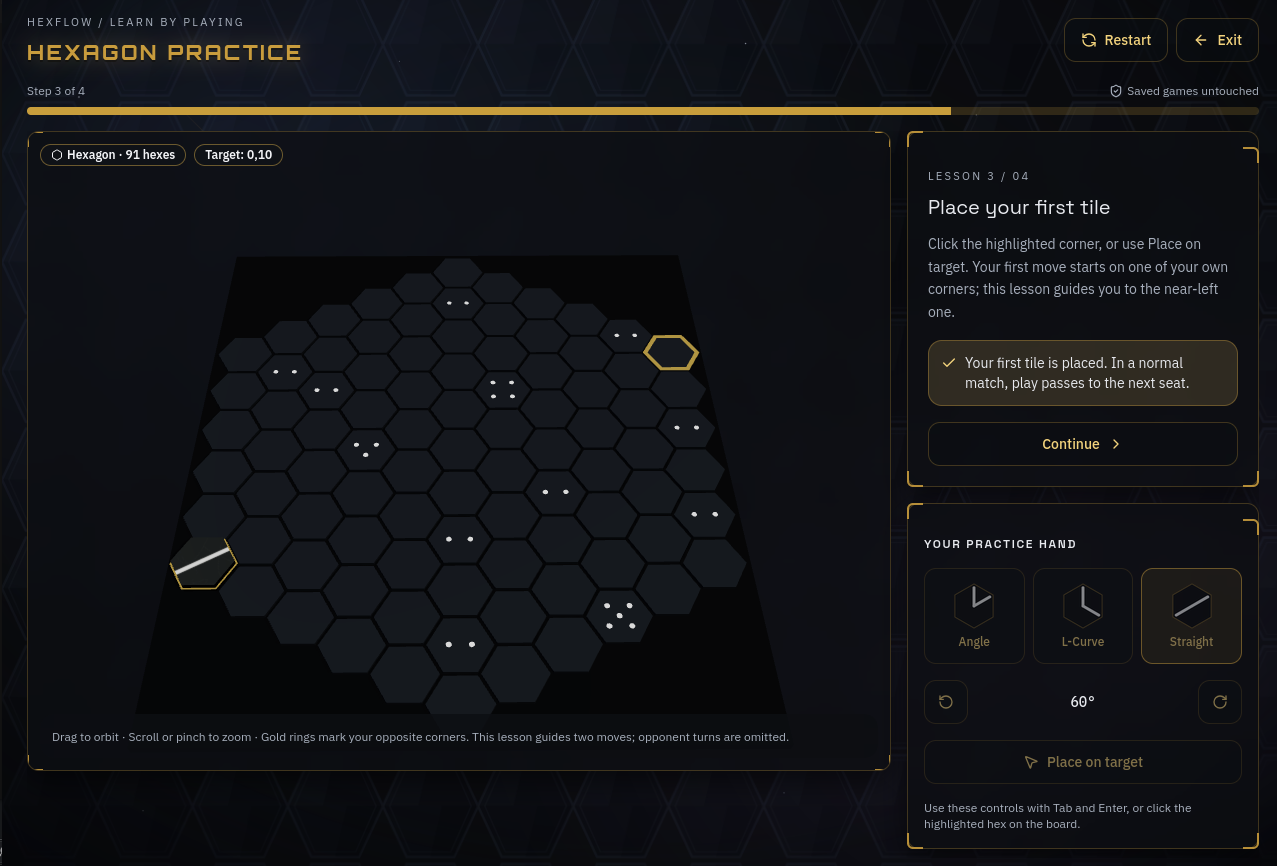
Step 3 Β· Place on corner β€” Your opening tile must land on one of your own corner hexes (the gold-ringed goal hexes on the board).
Step 4 β€” Make a connection
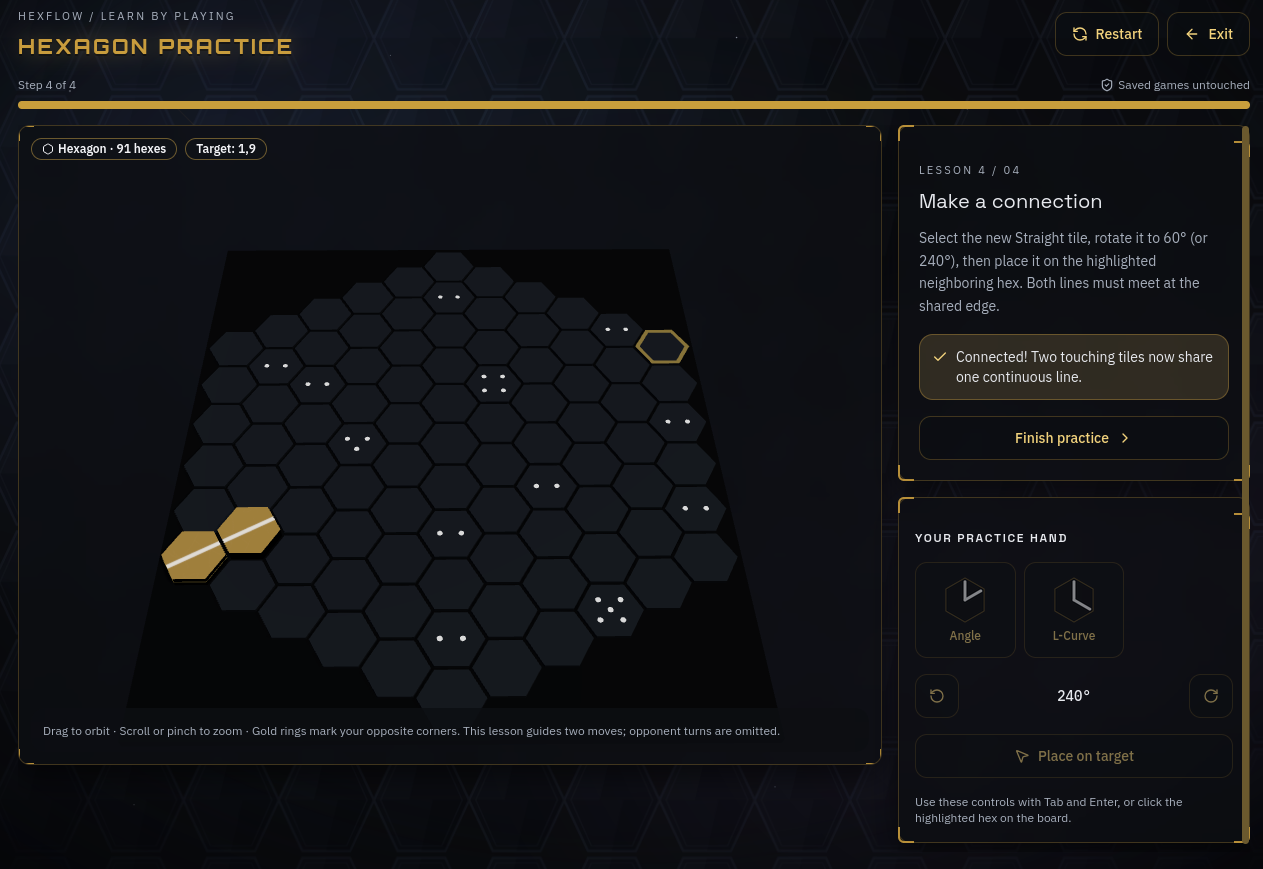
Step 4 Β· Connect & grow β€” Each new tile must touch the board and have at least one line meeting an existing line. Chain them corner to corner to win.

06 Β· The Pieces

Tile reference

All lines run from the midpoint of one flat side to another. Sides: T, TR, BR, B, BL, TL.

PtsTileLines
2Straight
T ↔ B
Vertical pass-through
4X-Cross
T-B + TR-BL
Two crossing lines
2Angle
T ↔ TR
Short 60Β° bend
3Arrow
T β†’ TR+TL
Splits to upper sides
1Block
none
Inner hexagon β€” pure blocker
3Y-Right
T-B + BR
Straight with branch
3Y-Left
T-B + BL
Straight with branch
5Star-6
all 6 sides
Connects everywhere
3Tri-Branch
B β†’ TR+TL
Y from bottom to top
2L-Curve
T ↔ BR
120Β° curve
4Spread
T β†’ B+BR+BL
Three-way spread
Black tile set with labels White tile set
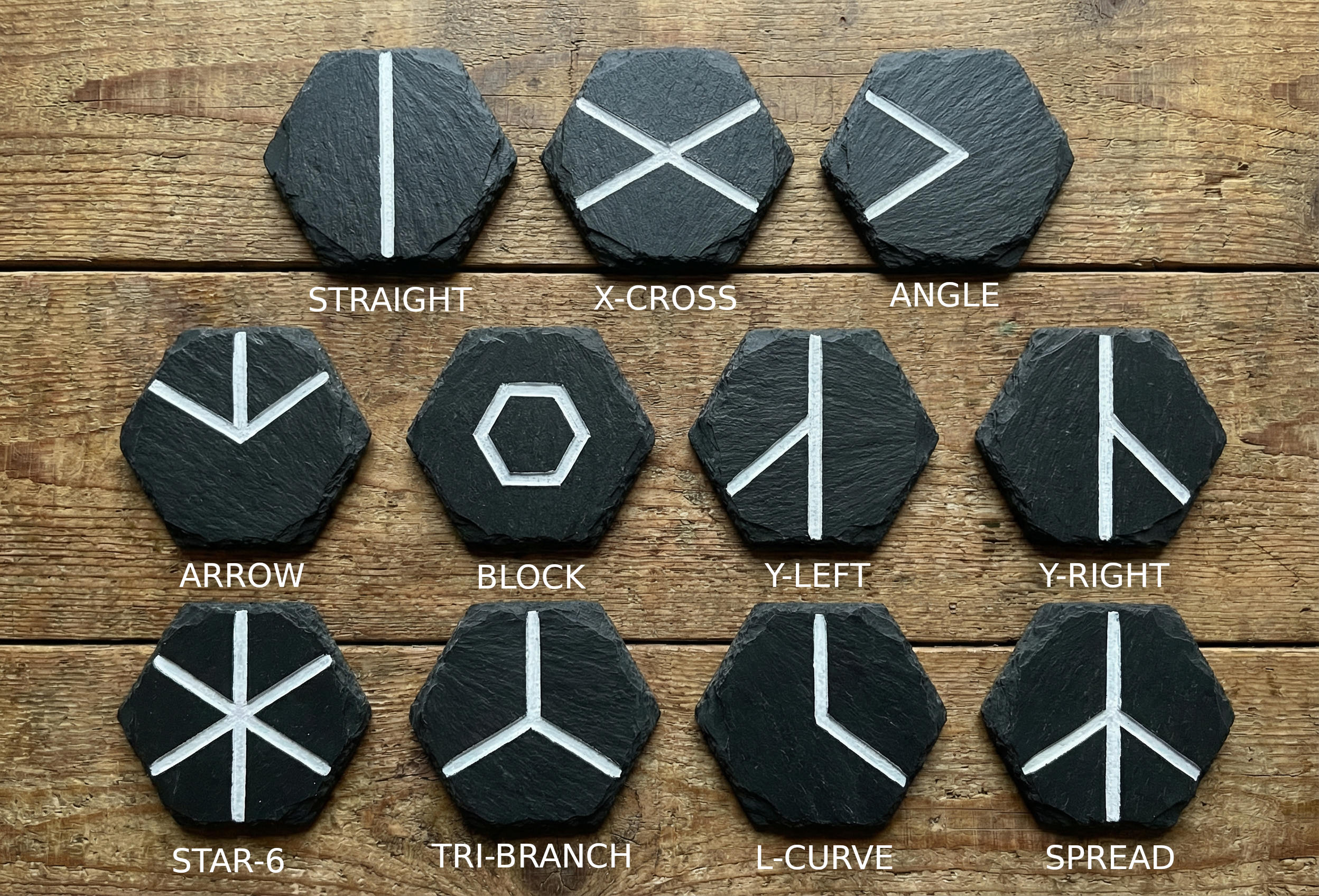
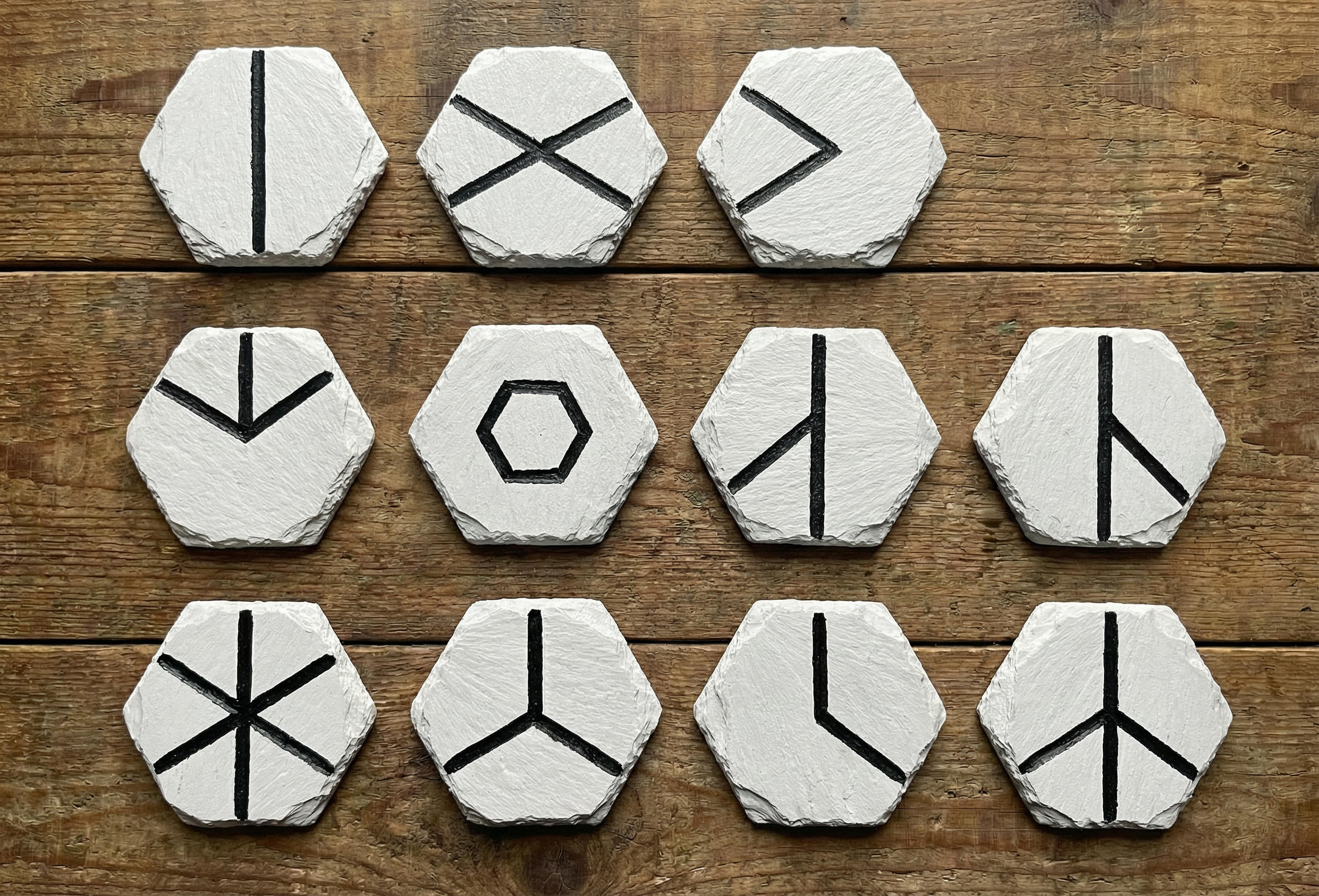
Black tiles (top) and White tiles (bottom) β€” flat-side routing, all 11 types.

07 Β· Scoring & Victory

Winning the game

Race Mode

The instant you complete a valid path between your corners, you win. Fast, tense, decisive.

Battle / Points

The first completed path scores a bonus, then play continues. Highest total score wins β€” captures and dot hexes count.

Tri-Board (3P)

Three players, three corners. Connect your corner to any of the three centre hexes to win.

Dot hexes & scoring

A completed path starts at a base of 10. Dot hexes along your path add up:

●●  2 dotsΓ—2 / +2
●●●  3 dotsΓ—3 / +3
●●●●  4 dotsΓ—4 / +4
●●●●●  5 dotsΓ—5 / +5

Example
Race path through one 2-dot + two 3-dot hexes: 10 Γ— (2+3+3) + 30 win bonus = 110 pts. On the Tri-Board the multipliers are added as flat bonuses instead.

The language of HEXFLOW

HEXFLOW β€” the continuous flow of lines that completes your path corner to corner. Achieve it and the board sings.

HEXLOCK β€” the board fills with no valid path left to build. The game is sealed; it’s resolved by the longest valid path and captured tiles.

The Block β€” the only line-less tile. It carries no path for anyone; use it to jam, redirect or seal a rival’s route.

© B. W. Evans  ·  Mythic Creations LLC